
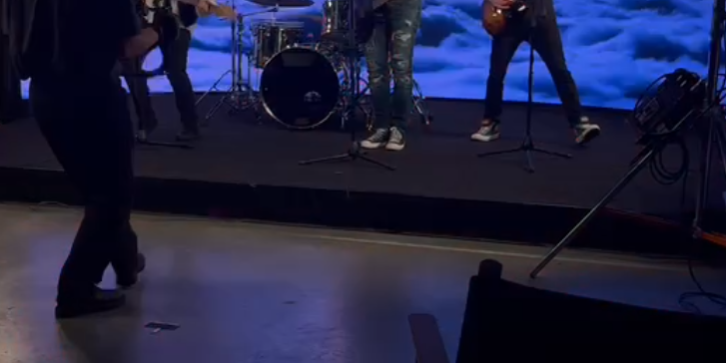
Shooting a music video on an LED wall is one of the most efficient ways to achieve cinematic production value without the unpredictability of location shoots. At Upperland Studio in Richmond, BC, our 7-metre curved LED wall (180°) combined with Unreal Engine and real-time camera tracking gives artists and directors a controlled, creative environment that rivals stages costing three to five times as much.
This behind-the-scenes article breaks down the complete production workflow — from the first creative call to the final export — so you know exactly what to expect when you book an LED wall music video shoot in Vancouver.
Phase 1: Pre-Production Planning (1–3 Weeks Before Shoot)
Every successful LED wall music video begins well before anyone steps on set. Pre-production is where creative ambitions get translated into executable plans, and it typically involves three key steps.
Creative Brief and Concept Lock
The process starts with a creative brief — a conversation between the artist, director, and Upperland’s production team. We discuss the song’s mood, visual references, wardrobe, and the number of distinct “looks” (unique LED backgrounds and lighting setups) the video requires. Most music videos use between three and eight looks.
At this stage we also determine whether the shoot needs just the LED wall or additional studio resources like the green screen area or multi-camera podcast setup for interview-style segments.
LED Content Design in Unreal Engine
Once the concept is locked, Upperland’s team begins building or sourcing the virtual environments that will display on the LED wall. Using Unreal Engine 5, we create real-time 3D scenes — cityscapes, nature environments, abstract art, stylized interiors — that respond to camera movement via our tracking system.
For artists who have existing visual assets (album artwork, brand colors, custom 3D models), we integrate those directly. For those starting from scratch, we pull from our library of optimized Unreal scenes and customize them to match the brief.
AI-Driven Pre-Visualization
Before the shoot day, we run a pre-visualization session using Upperland’s AI-driven previz tools. This allows the director to see rough approximations of how each look will appear on camera — including lens choice, camera angle, and lighting — without booking a full studio day. It dramatically reduces on-set guesswork and is a key reason our shoots run on schedule. Learn more about this technology in our complete LED wall studio guide.
Phase 2: LED Content Selection and Calibration
On the morning of the shoot — or the evening before for larger productions — the technical team loads all Unreal Engine scenes onto the LED wall and runs calibration checks:
- Color accuracy: Ensuring the wall’s color output matches the intended palette when viewed through the specific camera and lens combination being used.
- Brightness levels: Adjusting wall intensity so it serves as both backdrop and practical light source without clipping highlights on the performer.
- Refresh rate sync: Matching the wall’s refresh rate to the camera’s shutter speed to eliminate banding or flicker artifacts.
- Tracking calibration: Verifying that the real-time camera tracking system accurately maps physical camera movement to the virtual scene’s perspective.
This calibration step typically takes 30–60 minutes and is included in your studio booking. It’s one of the most important steps in the process — skipping it leads to color mismatches and visual artifacts that are expensive to fix in post.
Phase 3: Day-of-Shoot Process
A typical music video shoot day at Upperland follows this structure:
- Hour 1: Load-in, camera setup, final LED calibration, wardrobe and hair/makeup.
- Hours 2–3: First two to three looks. Each LED background change takes 2–5 minutes (compared to 30–90 minutes for a traditional set change).
- 30-minute break: Review footage on the studio’s client monitor. Make adjustments.
- Hours 4–5: Remaining looks, pickup shots, any experimental angles the director wants to try.
- Hour 6: Wrap, data backup, and brief post-shoot debrief.
Most music videos achieve full coverage in a single 5–6 hour session. More complex productions with choreography, multiple wardrobe changes, or narrative segments may require a full day (8–10 hours). For comparison with traditional approaches, see our LED wall vs. traditional film set breakdown.
Phase 4: Lighting Design on the LED Volume
Lighting is where LED wall production diverges most dramatically from conventional filmmaking. The wall itself emits light — a lot of it — and that light wraps around the performer naturally, creating reflections, fill, and ambient color that would require extensive rigging on a traditional stage.
Upperland’s professional stage lighting rig complements the wall with:
- Key lights: Positioned to add definition and contrast beyond what the wall provides.
- Hair/rim lights: Separating the performer from the background, especially in darker scenes.
- Haze: A light atmospheric haze makes volumetric light rays visible, adding cinematic depth.
- Practicals: Small LED panels or tungsten bulbs placed within the frame for visual interest.
The lighting designer works in concert with the LED wall operator — when the background shifts from a sunny beach to a moody alleyway, the stage lights adjust simultaneously. This synchronized approach is what makes the final image look like a single, cohesive environment rather than a performer standing in front of a screen.
Phase 5: Post-Production
One of the biggest advantages of LED wall production is how little post-production it requires compared to green screen. Here’s what a typical music video post pipeline looks like after an Upperland shoot:
- Editorial: Standard edit assembly — selecting the best takes, cutting to the music, building rhythm. (8–20 hours depending on complexity.)
- Color grading: Because backgrounds are captured in-camera, the colorist works with a complete image from the start. Grading typically takes 4–8 hours. No compositing needed.
- VFX (if any): Usually limited to minor touch-ups, lens flare additions, or title cards. Heavy VFX is rarely necessary.
- Sound design: Syncing the final audio master to the visual edit.
- Delivery: Exporting for YouTube (4K), Instagram (1080×1080 and 9:16), and any other platforms.
Total post-production time for a standard LED wall music video: approximately 20–40 hours, versus 60–100+ hours for a comparable green screen production that requires compositing, rotoscoping, and background replacement.
Budget Breakdown: What Does an LED Wall Music Video Cost?
Transparency matters, so here’s a realistic breakdown for a mid-range music video at Upperland Studio:
- Studio rental (5 hours): Starting at $99/hr — includes LED wall, Unreal Engine operation, camera tracking, and basic lighting.
- Pre-production content design: Varies by complexity. Simple abstract backgrounds may be included; fully custom Unreal environments are quoted per project.
- Camera and lens package: Bring your own or rent through Upperland’s equipment partners.
- Crew: Director, DP, LED wall operator (provided by studio), hair/makeup, and production assistant — typically 4–6 people for a standard shoot.
- Post-production: Editorial, color, and delivery — varies by editor rates in Vancouver.
All-in, a professional music video shot on Upperland’s LED wall typically ranges from $3,000 to $15,000 depending on the scope of pre-production, crew size, and post-production needs. That’s competitive with — and often less than — a comparable green screen production once you factor in compositing costs. For a full pricing analysis, visit our LED wall studio pricing guide.
Frequently Asked Questions
How far in advance should I book an LED wall music video shoot?
We recommend booking at least 2–3 weeks in advance to allow time for pre-production content design. Rush bookings (under one week) are sometimes possible for projects using existing LED content from our library, but custom Unreal Engine environments need development time.
Can I bring my own director and camera crew?
Absolutely. Many clients bring their own creative team. Upperland provides the LED wall operator and technical support; you bring the creative vision and camera package. We’re also happy to recommend Vancouver-based directors and DPs who have experience shooting on our wall.
What camera systems work best with the LED wall?
Any cinema camera with a global shutter or genlock capability works well. Popular choices include the Sony VENICE 2, RED V-RAPTOR, ARRI ALEXA Mini LF, and Blackmagic URSA Mini Pro. Our team calibrates the wall’s refresh rate to your specific camera and shutter settings to eliminate banding. According to the RED technical documentation, their latest sensors are specifically optimized for LED volume work.
Is the LED wall suitable for dance or high-movement music videos?
Yes. The 180° curved wall provides ample space for choreography, and the real-time camera tracking maintains accurate perspective even during fast dolly or Steadicam moves. We’ve hosted everything from intimate acoustic performances to full dance crew shoots on our stage.
Book Your LED Wall Music Video Shoot
Whether you’re an independent artist planning your first professional music video or a label producing a full campaign, Upperland Studio’s LED wall stage in Richmond, BC is built to deliver cinematic results on efficient timelines. Book a tour or reserve your shoot dates, and let’s make something extraordinary together.